Simple Tips to Identify Vintage Jewellery: A Guide for Discerning Collectors
Vintage jewellery has an enduring appeal — the craftsmanship, the history, the sense that a piece has lived a life before yours. But the market is full of pieces that aren't quite what they seem: later reproductions, composite pieces assembled from different sources, or simply items misdated by sellers who don't know better. Here are some straightforward tips to help you tell the difference.
1. Start With the Hallmarks
In the UK, precious metals must be hallmarked by an assay office. The hallmark tells you the metal's purity, where it was tested, who made it, and — crucially — when. Date letters change annually and follow a specific sequence tied to each assay office. Cross-referencing the date letter with a hallmark guide is one of the quickest ways to verify a piece's age. If the hallmarks are missing, illegible, or inconsistent with the claimed period, proceed with caution.
2. Study the Gemstone Cuts
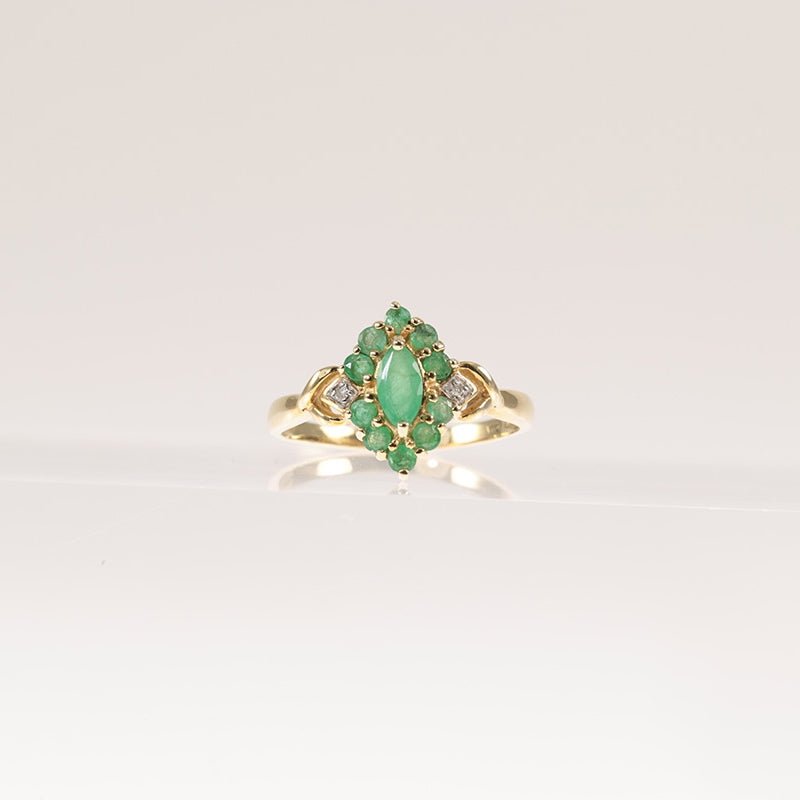
The way a stone is cut is a reliable indicator of age. Modern round brilliant cuts weren't possible before the 20th century — they require precision machinery. Older cuts include the old mine cut (cushion-shaped, common in the 18th and 19th centuries), the old European cut (rounder, popular 1890s–1930s), and the rose cut (flat-bottomed, used from the 16th century onwards). If a piece is claimed to be Victorian but features modern brilliant-cut stones, the stones have likely been replaced — or the piece isn't as old as claimed.
3. Look at the Clasps and Findings
The small functional components of a piece — clasps, catches, pins — are often overlooked but highly informative. C-catches without a rollover safety were standard before around 1900. Box clasps became common in the Edwardian era. Tongue-and-groove clasps suggest mid-20th century or later. Earring backs are equally telling: screwbacks predate clip-backs, which became fashionable in the 1950s. Pierced earring fittings largely fell out of fashion in the early 20th century before returning in the 1950s and 60s.
4. Feel the Weight
Genuine antique gold and silver pieces tend to be heavier than modern equivalents. Older manufacturing techniques used more metal, and the result is a satisfying solidity that's hard to fake. A piece that feels surprisingly light for its size may be gold-filled, gold-plated, or simply not as old as claimed.
5. Examine the Patina
Age leaves traces that are very difficult to replicate convincingly. Look for natural wear on high points, slight softening of fine details, and darkening in recessed areas. Artificially aged pieces often have patina applied too uniformly, or in places where genuine wear wouldn't occur. Trust your instincts — if something looks too pristine for its claimed age, or too uniformly worn, it probably is.
6. Know Your Periods
Each jewellery era has a distinctive aesthetic. Georgian pieces feature intricate metalwork and closed-back settings. Victorian jewellery is rich with sentimental motifs — hearts, snakes, forget-me-nots. Edwardian pieces are delicate and lacy, often in platinum or white gold. Art Nouveau flows with organic forms and enamel. Art Deco is bold, geometric, and graphic. If a piece's design doesn't match its claimed period, something is off.
7. Ask Questions and Buy From Trusted Sources
A reputable dealer will welcome your questions. Ask about provenance, any known repairs or replacements, and the basis for the dating. At Sparklier, we describe every piece honestly and are always happy to share what we know about its history and condition. When in doubt, an independent appraisal from a qualified gemmologist is always worthwhile for significant purchases.