Article: Why Preloved Jewellery and Watches Could Be Your Smartest Purchase Yet
Why Preloved Jewellery and Watches Could Be Your Smartest Purchase Yet
There's something special about slipping on a vintage Rolex or a pre-owned gold bracelet that's already lived a life before yours. Beyond the romance and history, there's actually a pretty compelling financial case for choosing preloved luxury pieces over brand new ones. Let me explain why buying second-hand might just be one of the smartest decisions you make.
The Depreciation Myth
Here's the thing about buying new luxury items – the moment you walk out of that boutique, your shiny new watch or piece of jewellery has already lost a chunk of its value. It's a bit like driving a new car off the forecourt. That initial depreciation hit? It's already happened with preloved pieces. Someone else has taken that financial knock, not you.
When you buy preloved, you're essentially stepping in after the steepest part of the value curve has already passed. The price you pay is often much closer to the item's true market value, rather than the premium you'd pay for that "brand new" experience. And if you've chosen well, there's genuine potential for your piece to hold its value or even appreciate over time.
Gold: The Timeless Hedge
Gold has been valued by humans for thousands of years, and that's not changing anytime soon. When economies wobble, currencies fluctuate, or geopolitical tensions rise, people often turn to gold as a safe haven. It's tangible, it's finite, and it doesn't rely on any government or institution to maintain its worth.
If you own a piece of gold jewellery, you're not just wearing something beautiful – you're wearing an asset that may strengthen as gold prices rise. Global uncertainty, inflation concerns, and shifts in monetary policy can all push gold values higher. Your preloved gold ring or necklace could become more valuable simply because the precious metal it's made from becomes more sought-after.
Watches and the Scarcity Factor
Luxury watches operate in a fascinating market. Certain models, particularly from heritage brands like Rolex, Omega, and Breitling, can become increasingly scarce over time. Production runs end, specific references get discontinued, and suddenly what was once readily available becomes hard to find.
Scarcity drives demand. When collectors and enthusiasts are chasing the same limited pool of watches, prices can climb. Add in factors like inflation – where the purchasing power of currency decreases but tangible assets may hold steady or increase – and you've got a recipe for potential appreciation.
Geopolitics plays a role here too. Trade restrictions, import duties, currency fluctuations between countries, and even political instability can affect both the availability and desirability of luxury watches in different markets. A watch that's difficult to obtain in one region might command a premium there, while global events can shift collector interest toward certain brands or countries of origin.
The Inflation-Resistant Argument
While nothing is truly "inflation-proof," physical luxury assets like gold jewellery and collectible watches have historically shown resilience during inflationary periods. Unlike cash sitting in a bank account losing purchasing power, a well-chosen piece of jewellery or a sought-after watch may maintain or grow its value relative to inflating currencies.
The key word here is "may." Markets can be unpredictable, and not every piece will appreciate. But the fundamental logic holds: you're investing in something tangible, made from precious materials, with intrinsic value that doesn't evaporate when economic conditions shift.
Are Preloved Watches a Good Investment?
This is one of the most common questions we hear. The honest answer is: it depends on what you buy and when. Vintage Rolex models, limited edition Omega pieces, and discontinued luxury watch references have shown strong value retention and appreciation over the years. However, not every preloved watch will increase in value.
What makes preloved watches potentially smart purchases is that you're buying at closer to true market value rather than retail markup. You avoid the immediate depreciation that comes with buying new, and if you choose sought-after models from respected brands, you're holding an asset that may appreciate as scarcity increases and demand remains strong.
Why Choose Preloved Jewellery Over New?
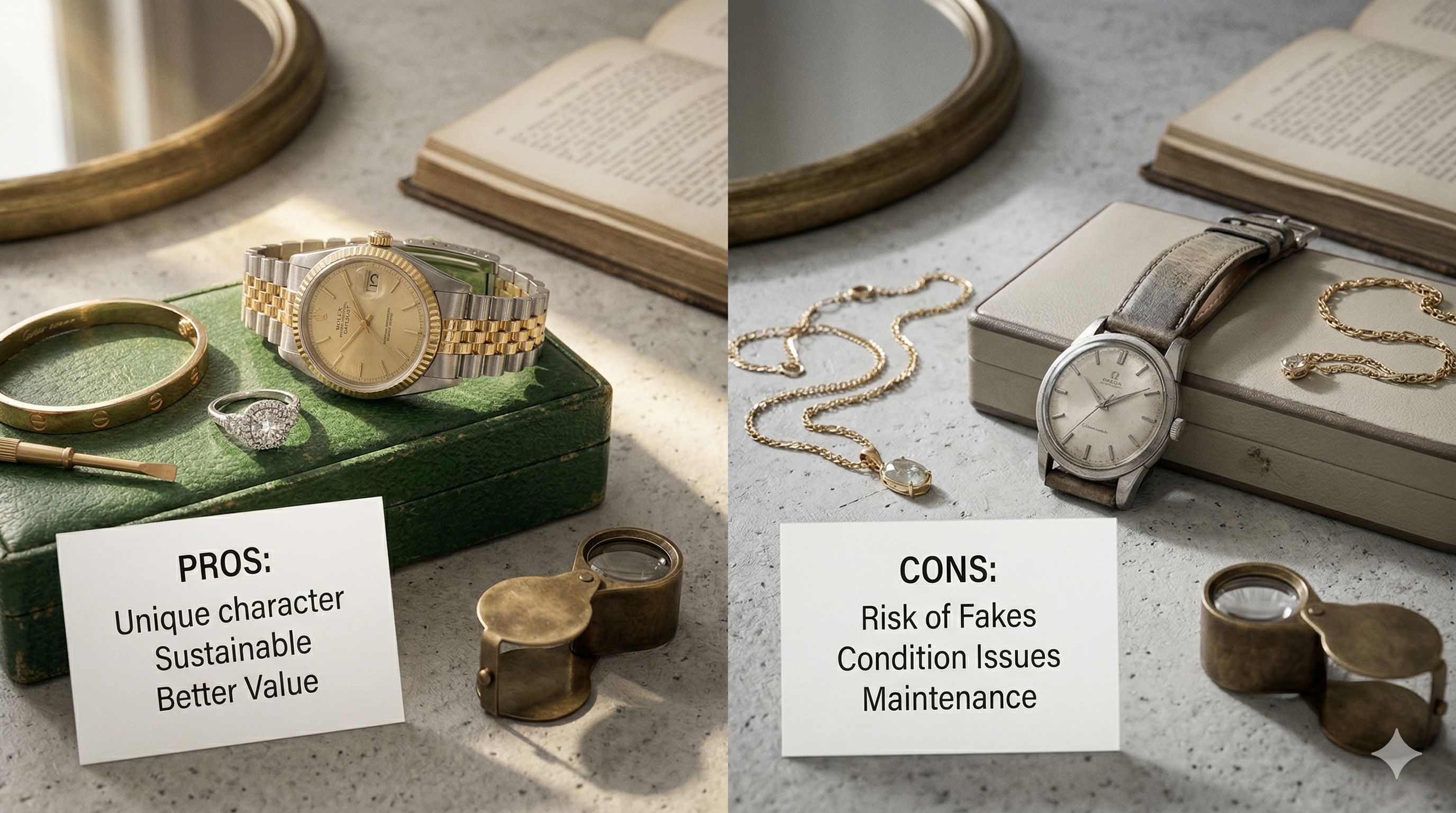
Beyond the financial considerations, preloved jewellery offers something new pieces simply can't: character and craftsmanship from different eras. Vintage gold rings, antique diamond necklaces, and pre-owned designer pieces often feature superior metalwork and attention to detail that's harder to find in modern mass production.
From a value perspective, you're getting more for your money. The same budget that might buy you a modest new piece could secure a stunning vintage item with better materials, superior craftsmanship, and genuine investment potential.
The Bottom Line
Buying preloved luxury jewellery and watches isn't just about saving money upfront – though that's certainly a perk. It's about making a potentially smarter financial choice. You're avoiding the initial depreciation hit, investing in materials that may strengthen with gold prices, and potentially benefiting from scarcity and market dynamics that could see values rise over time.
Plus, you get to wear something with character, history, and a story to tell. Not a bad combination, really.