Birthstones by Month: The Preloved Buyer's Guide to Birthstone Jewellery
A birthstone piece is the easiest genuinely personal gift in jewellery — and buying it preloved adds a second layer of meaning: a stone with a history, marking a birthday, at a price that lets you buy better gold and bigger stones than new retail ever would. Here's the full calendar, with honest notes on what each stone is like to own and what to look for in vintage examples.
January — Garnet
The deep wine-red of garnet has been worn for protection since antiquity. Victorian jewellers loved Bohemian garnets in clustered rose-cut pavé; today they remain wonderfully affordable, hard enough for regular wear, and glorious in warm yellow gold — see our garnet drop earrings for the effect.
February — Amethyst
Once ranked with rubies and emeralds until huge Brazilian finds made it accessible, amethyst's violet suits every metal. Vintage stock is abundant and superb value — from deep Siberian-purple single stones to pale “Rose de France” lilac. We rarely have fewer than a dozen amethyst pieces in stock, like these oval-cut studs.
March — Aquamarine
The serene sea-blue beryl, emerald's calmer sister. Art Deco jewellers cut it into elegant emerald cuts; mid-century pieces favour big, limpid ovals. Paler stones are common and lovely; the more saturated the blue, the more collectable — as in our aquamarine drops.
April — Diamond
The classic. April babies are expensive to buy for new — which is exactly why preloved is the intelligent route: vintage solitaires and old-cut cluster rings deliver far more diamond per pound, and old European cuts have a candlelit character modern brilliants can't replicate.
May — Emerald
The most storied of the “big three” coloured stones — we've written a whole piece on emeralds and their legends. They're almost always included (“jardin” — the garden — is part of their charm) and slightly softer than sapphire, so vintage emeralds in protective gold settings, like our emerald and diamond dress ring, are the sensible way to wear May's stone daily.
June — Pearl, Moonstone & Alexandrite
June gets three: classic pearls (vintage strands and pearl-set gold are perennially elegant), dreamy blue-sheened moonstone beloved of Art Nouveau, and rare colour-change alexandrite — genuinely scarce in antique pieces and priced accordingly when it appears.
July — Ruby
The stone of passion, and pound-for-pound one of the most valuable gems on earth in fine qualities — the full story is in our guide to rubies, the king of gems. Vintage ruby clusters and half-hoops let you wear real red corundum without fine-gem prices — our ruby studs are a neat example.
August — Peridot
The fresh, zesty green of peridot was a Victorian and Edwardian favourite (Edward VII wore it), and antique peridot in yellow gold is one of jewellery's happiest pairings — see our peridot cluster ring or the suffragette-style pieces where it stood for “give” in green-white-violet.
September — Sapphire
The most wearable of all the precious stones: hard, versatile and timeless, in every blue from cornflower to midnight — we've covered sapphire's royal history separately. Sapphire and diamond is the definitive combination — as in our sapphire halo ring — and vintage examples are plentiful across every budget.
October — Opal & Tourmaline
Opal is our house favourite — no two stones alike, each with its own play of colour, and suddenly fashionable again (see our piece on the return of the opal). Victorians and Edwardians set opals constantly, and our collection nearly always includes a shelf of them, from opal studs to cabochon rings. Opals are softer than most gems — remove them for housework, and never let them near ultrasonic cleaners.
November — Topaz & Citrine
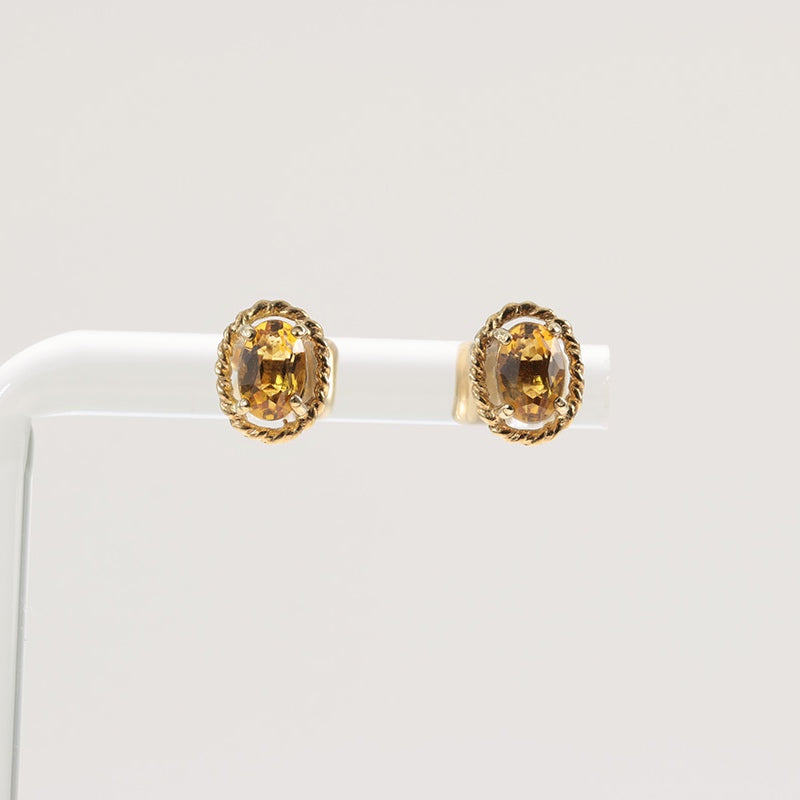
Warm honey and amber tones for autumn birthdays. Big Retro-era citrines in sculptural gold cocktail rings are spectacular value; neat citrine studs make an easy everyday gift. True imperial topaz is the rarer, pricier cousin worth seeking in antique pieces.
December — Turquoise, Tanzanite & Zircon
Turquoise threads through jewellery history from ancient Egypt to Victorian sentimental pieces like our antique turquoise ball earrings. Tanzanite — discovered only in 1967, found only in Tanzania — brings a violet-blue no other stone matches; see our tanzanite trilogy ring.
Buying birthstone jewellery preloved: three tips
- Check the hallmark first — it confirms the gold and often dates the piece; our hallmarks guide shows you how.
- Match the stone to the wearer's habits — sapphire, ruby, garnet and amethyst shrug off daily wear; opal, pearl and emerald prefer occasional outings and gentle care.
- Vintage means character — old cuts, hand-made settings and stones you simply can't buy new. That's the real gift.
Browse the full preloved jewellery collection and use the birthstone filter to see what's in stock for your month — and if you're hunting a particular stone for a particular birthday, tell us; new pieces arrive weekly and we're happy to keep an eye out.